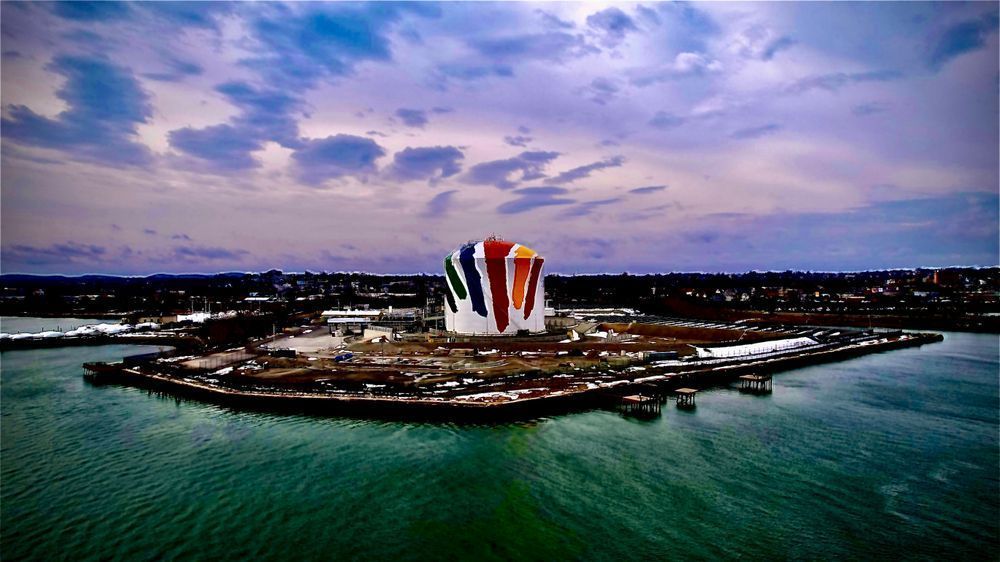
Here are some interesting facts about the gas tank in Boston (Dorchester Gas Tank or Savin Hill Gas Tank):
1. **Iconic Landmark**: The gas tank was a prominent fixture on the Boston skyline for decades, standing approximately 220 feet tall and visible from various parts of the city.
2. **Functional History**: Built in 1949, the tank served as a critical storage facility for natural gas, supporting the energy needs of Boston's residents and businesses.
3. **Community Art Canvas**: Over the years, the gas tank became a canvas for local artists, who painted vibrant murals and designs on its cylindrical surface, transforming it into a beloved piece of public art.
4. **Cultural Symbol**: It became a symbol of pride and identity for the Dorchester neighborhood, reflecting the diverse community and its rich cultural heritage.
5. **Demolition and Removal**: In 2019, the gas tank was decommissioned and subsequently demolished, marking the end of its functional service and the removal of a significant landmark from Boston's skyline.
6. **Public Reaction**: The demolition sparked mixed reactions among residents, with some mourning the loss of a familiar landmark and others embracing the opportunity for urban renewal and change.
7. **Photographic Legacy**: Photographs of the gas tank, both before and during its demolition, continue to evoke nostalgia and serve as a reminder of its historical and cultural significance.
8. **Historical Context**: The construction and presence of the gas tank reflected mid-20th century advancements in energy infrastructure and urban development in Boston.
9. **Environmental Impact**: The removal of the gas tank also raised awareness about environmental considerations and the importance of sustainable practices in urban planning.
10. **Legacy of Community Engagement**: The gas tank's history highlights the power of community engagement and public art in shaping the identity and character of urban neighborhoods like Dorchester in Boston.