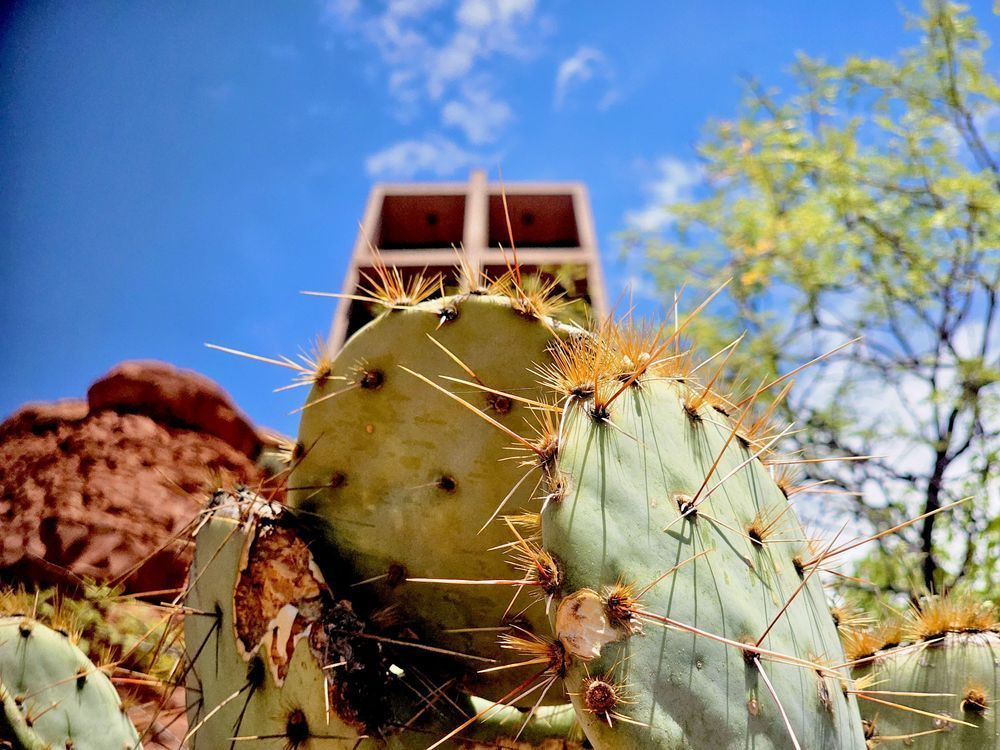
Sacred Thorns captures two unmistakable symbols of Sedona in a single composition: the resilient cactus of the Arizona desert and the Chapel of the Holy Cross rising dramatically from the red rocks behind it.
Photographed from a low perspective, the cactus dominates the foreground with its green pads and long golden spines sharply defined against Sedona’s brilliant blue sky. Above it, the geometric form of the chapel appears almost to emerge from the desert itself, creating a contrast between natural texture and human architecture.
The Chapel of the Holy Cross has become one of Sedona’s most recognizable landmarks, celebrated for the way its modern design integrates into the surrounding red-rock formations. This photograph offers a less traditional interpretation, allowing the desert vegetation to take center stage while the chapel quietly anchors the background.
Fun Fact:
The Chapel of the Holy Cross was completed in 1956 and was designed to appear as though it rises directly from Sedona’s red rocks. Its dramatic location and 90-foot cross have made it one of the most photographed landmarks in Arizona.
Sacred Thorns captures two unmistakable symbols of Sedona in a single composition: the resilient cactus of the Arizona desert and the Chapel of the Holy Cross rising dramatically from the red rocks behind it.
Photographed from a low perspective, the cactus dominates the foreground with its green pads and long golden spines sharply defined against Sedona’s brilliant blue sky. Above it, the geometric form of the chapel appears almost to emerge from the desert itself, creating a contrast between natural texture and human architecture.
The Chapel of the Holy Cross has become one of Sedona’s most recognizable landmarks, celebrated for the way its modern design integrates into the surrounding red-rock formations. This photograph offers a less traditional interpretation, allowing the desert vegetation to take center stage while the chapel quietly anchors the background.
Fun Fact:
The Chapel of the Holy Cross was completed in 1956 and was designed to appear as though it rises directly from Sedona’s red rocks. Its dramatic location and 90-foot cross have made it one of the most photographed landmarks in Arizona.